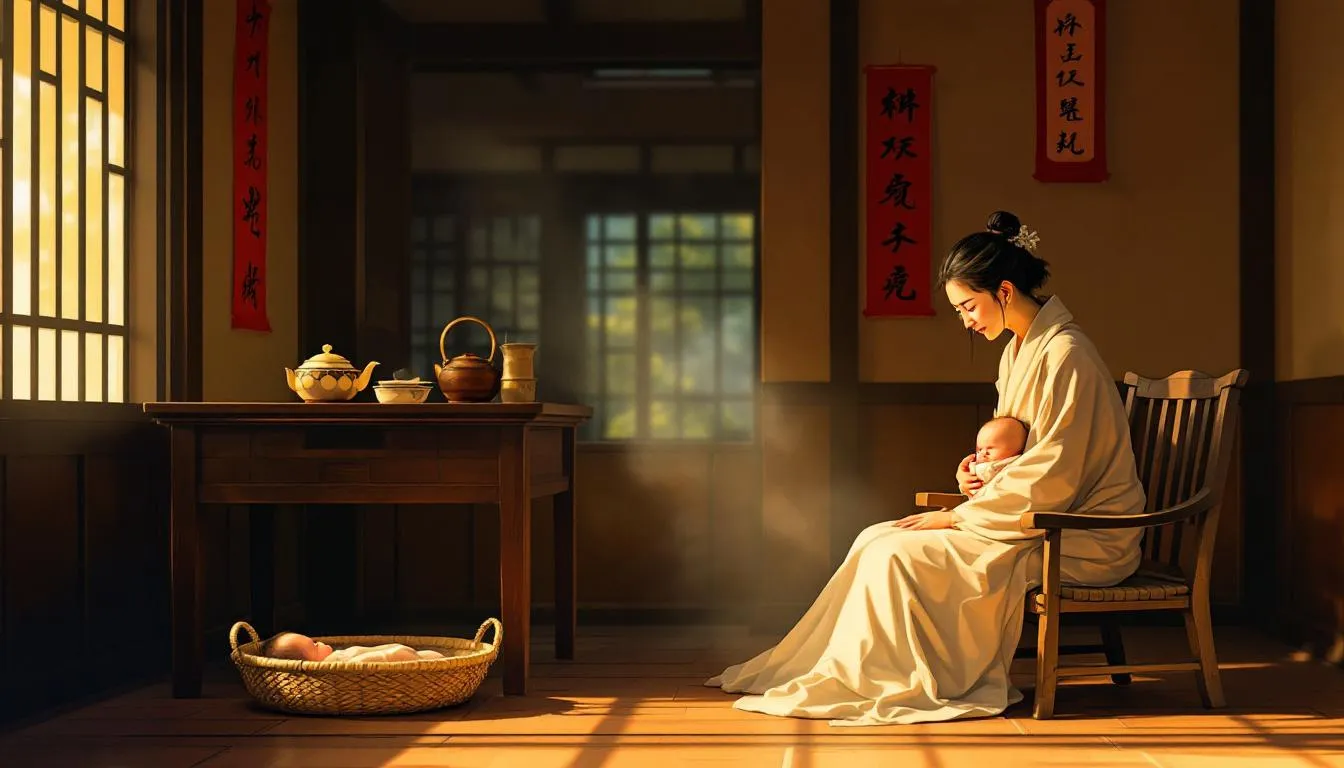
For over two millennia, Chinese mothers have followed a sacred postpartum tradition that prioritizes complete rest, specialized nutrition, and unwavering family support. This practice, known as confinement in Chinese culture or 坐月子 (zuò yuè zi), literally translates to "sitting the month" and represents one of the world's most comprehensive approaches to postpartum recovery.
Dating back to the Han Dynasty (206 BCE–220 CE), Chinese confinement has evolved from ancient survival necessity into a sophisticated care system that modern research increasingly validates. While some traditional rules may seem restrictive by contemporary standards, the core principles of extended rest, nutritional support, and family involvement offer valuable insights for postpartum care across all cultures.
What is Chinese Confinement (坐月子)?
Chinese confinement, known as 坐月子 (zuò yuè zi), literally means "sitting the month" and represents a traditional 30-day postpartum practice dating back over 2,000 years to the Han Dynasty. This comprehensive recovery regimen involves complete rest, specialized diet, and protection from cold and wind after giving birth, based on traditional Chinese medicine principles that view childbirth as depleting qi (vital energy) and blood.
The confinement period typically extends to 42-45 days for C-section deliveries due to longer surgical recovery needs. Traditional Chinese medicine theory holds that childbirth creates a "great opening" in the mother's body, leaving her vulnerable to external influences that could cause chronic health problems if proper restoration doesn't occur during the critical postpartum period.
Modern Chinese confinement practices maintain these foundational elements while adapting to contemporary lifestyles and medical understanding. The practice emphasizes that inadequate recovery during this crucial window can lead to long-term health issues, making the investment in proper confinement care essential for the mother's physical and emotional wellbeing.
Core Principles of Chinese Confinement
The foundation of Chinese confinement rests on complete physical rest to allow internal organs to return to their pre-pregnancy state. Traditional Chinese medicine theory suggests that pregnancy and childbirth displace and weaken internal organs, requiring extended rest for proper realignment and strengthening.
Rest (休息)
Complete physical and mental relaxation for 30 or more days, with mothers encouraged to remain in bed and limit movement to essential activities only.
Nutrition (营养)
Special confinement meals designed to restore strength and enhance milk production, following traditional Chinese medicine principles.
Warmth (保暖)
Maintaining body temperature through layered clothing, covered head and feet, and avoiding exposure to cold air or air conditioning.
Support (支持)
Family members or professional caregivers providing comprehensive assistance with all daily tasks, from meal preparation to newborn care.
Modern Adaptations and Scientific Perspectives
Contemporary mothers often modify strict traditional confinement rules while maintaining core principles that support recovery. Modern hygiene practices allow gentle showering with warm water and herbal preparations, followed by immediate drying and warming to address traditional concerns about cold exposure.
Healthcare professionals increasingly recognize the benefits of extended rest, family support, and proper nutrition while questioning restrictions that may conflict with modern medical knowledge. Many practitioners now recommend a balanced approach that incorporates traditional wisdom with evidence-based medicine.
Professional confinement centers offering medically supervised traditional care have emerged in urban areas, providing luxury accommodations with 24/7 nursing staff, traditional meal preparation, and modern amenities. These facilities bridge traditional practices with contemporary comfort and medical oversight.
Need Expert Postpartum Care?
Our experienced Chinese confinement nannies provide traditional postpartum care with modern comfort and safety.
Find Your Confinement Nanny